How AI Analyzes Rowing Technique
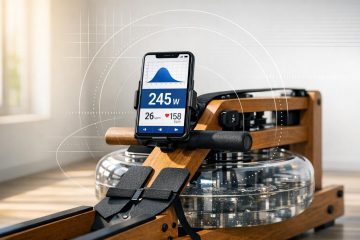
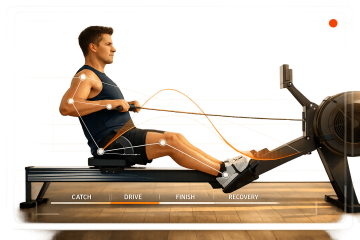
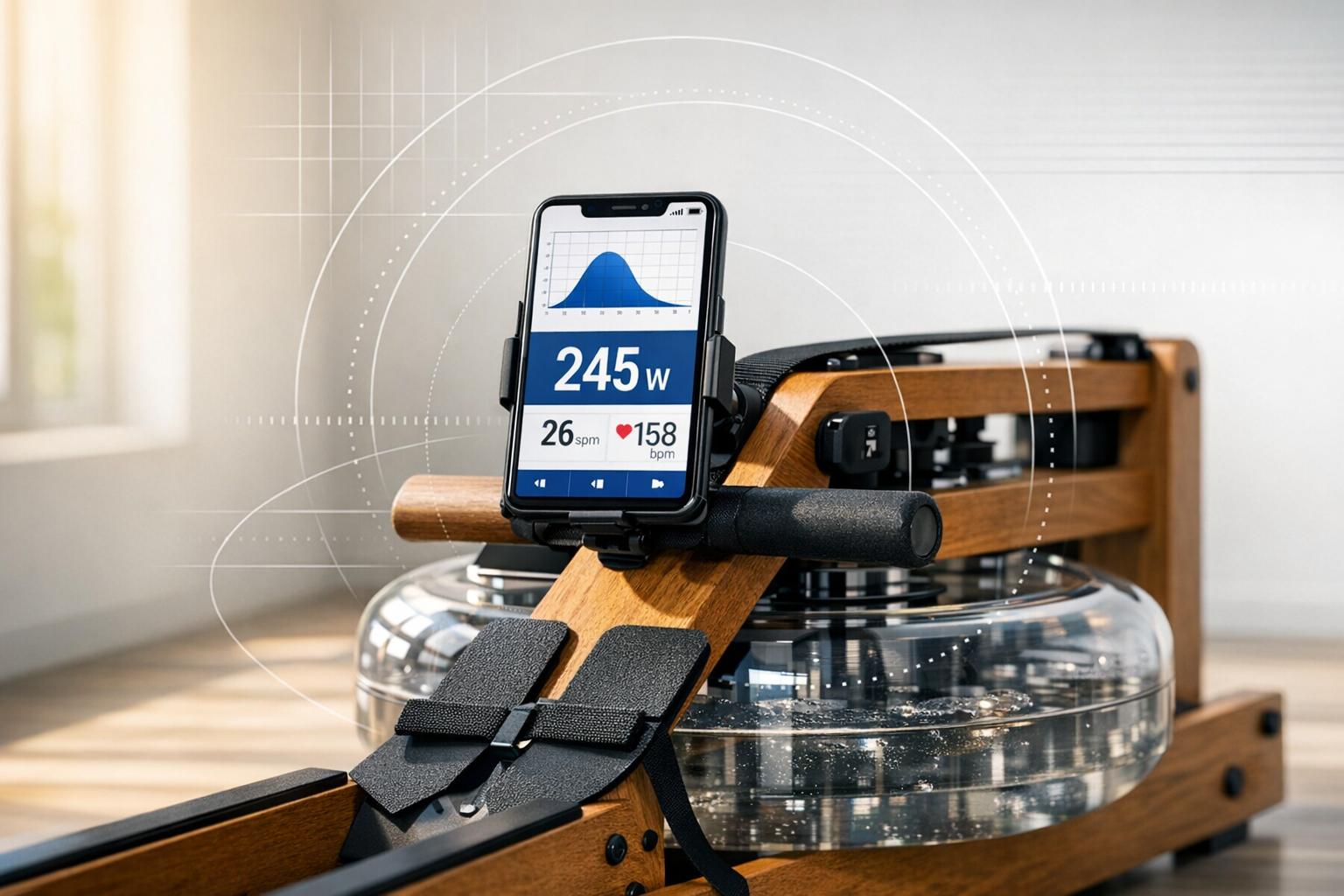
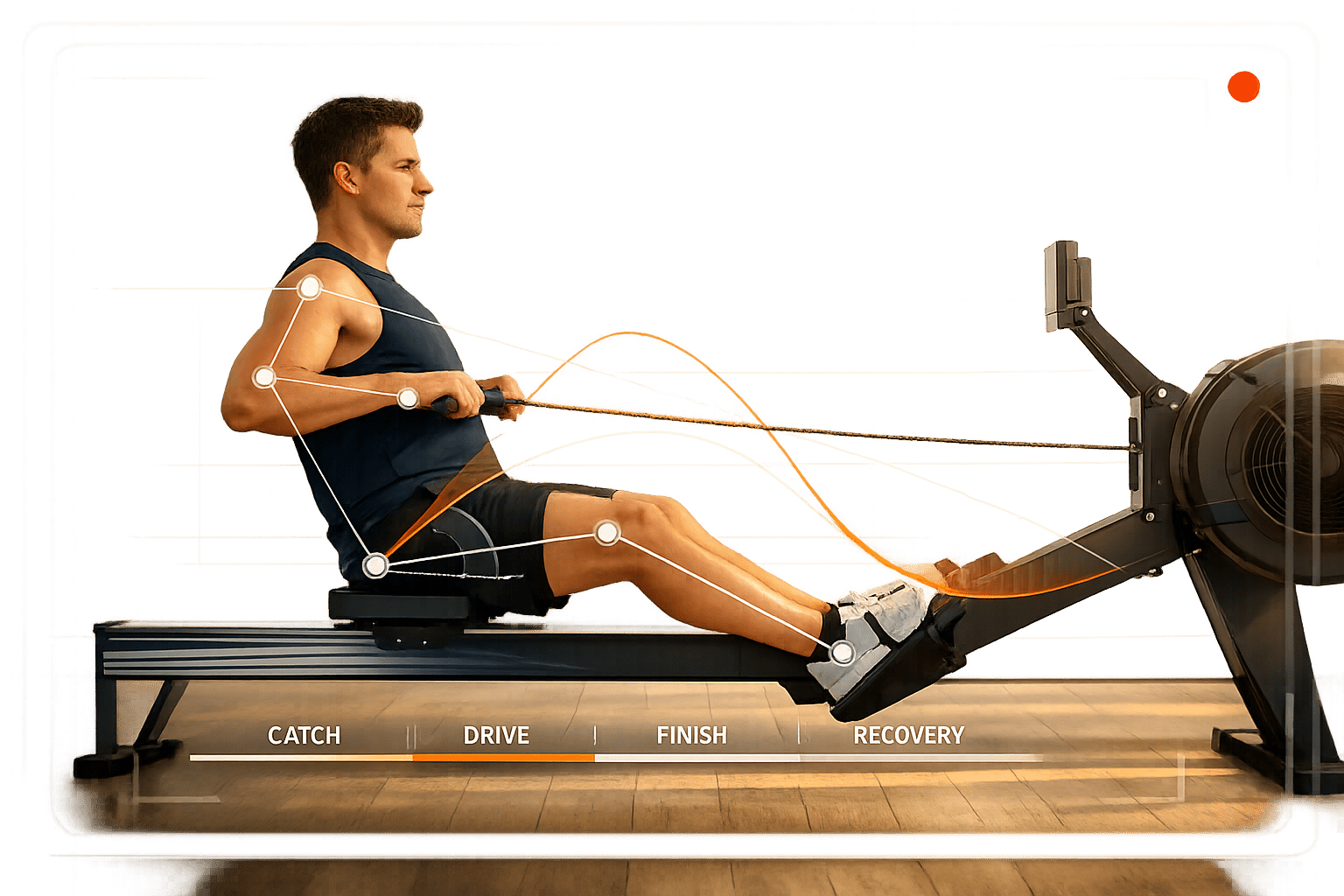
AI is transforming rowing by providing precise, real-time feedback on your technique. Using a smartphone and advanced algorithms, tools like Ergatta‘s Coach AI analyze your rowing stroke in four key phases – catch, drive, release, and recovery. By tracking joint movements and comparing them to ideal models, AI identifies common mistakes like bending knees too early or misaligning your sequence. It also highlights metrics like catch duration, peak force, and stroke rate to help you improve efficiency, reduce injury risks, and boost performance.
Key Takeaways:
- Real-Time Feedback: AI analyzes your form from a simple side-profile video.
- Error Detection: Flags common technical issues for focused improvement.
- Metrics Tracking: Measures angles, force curves, stroke rate, and more.
- Injury Prevention: Monitors posture and mechanics during workouts.
- Personalized Training: Adjusts intensity using data like heart rate variability.
Recording a clear, one-minute video with proper setup (landscape mode, steady camera) is all you need to get started. AI tools provide actionable insights, helping both beginners and experienced rowers refine their technique and train smarter.
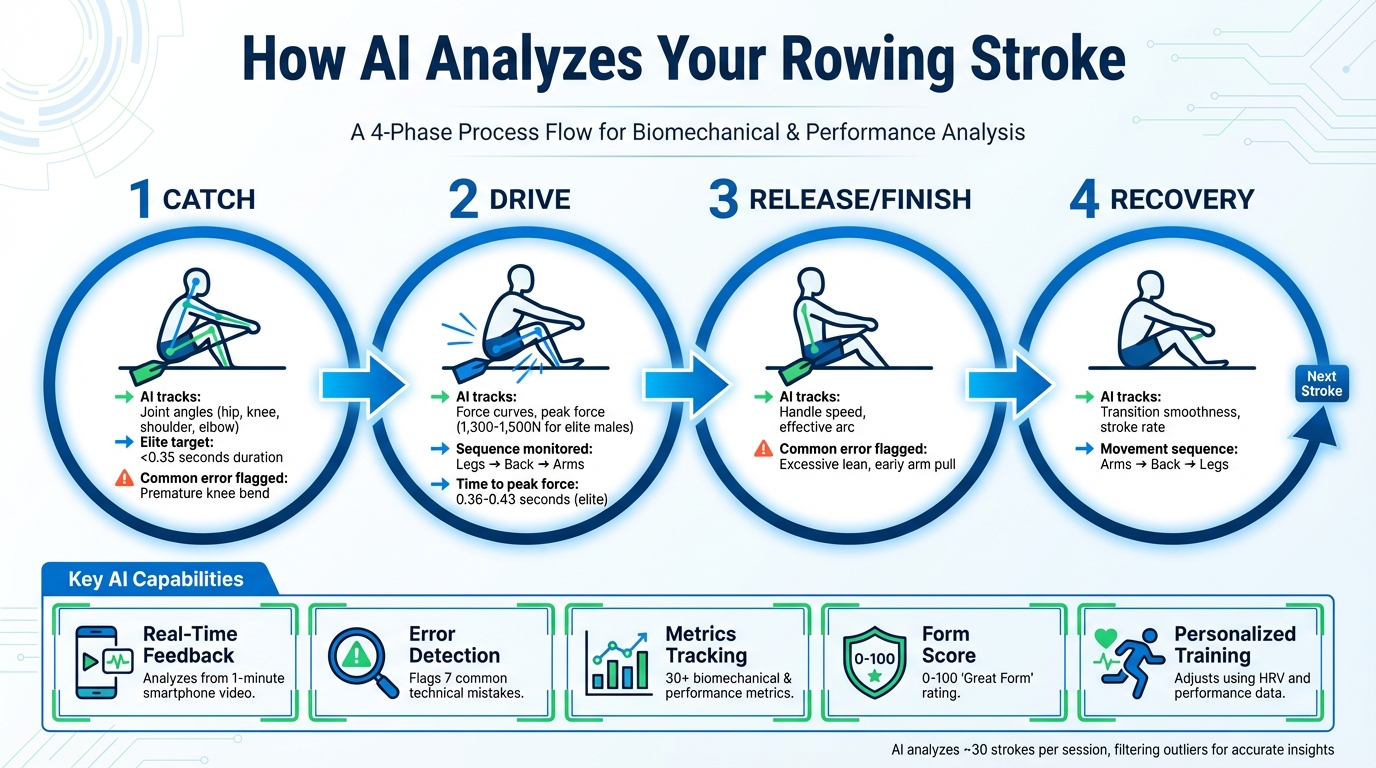
How AI Analyzes Rowing Technique: The 4-Phase Stroke Breakdown
Ergatta Coach AI
Setting Up Video Capture for AI Analysis
Capturing clear, high-quality video is essential for AI to analyze your rowing technique accurately. Surprisingly, even a one-minute recording from a smartphone can be enough for tools like Ergatta’s Coach AI to work effectively.
How to Record Rowing Strokes
Position your camera to capture a side-profile view of your rowing motion. Place it at least 6 feet away, aligning it with the level of your rowing machine’s display. The goal is to keep both the entire rower and your body visible within the frame throughout the session.
Always shoot in landscape mode to ensure the horizontal motion of your stroke is fully captured. Ergatta emphasizes:
The camera frame view should include the entire length of your rower, as well as your entire body, throughout your session.
Choose a clean, uncluttered background and ensure proper lighting so your movements stand out clearly. For systems that require calibration, use tape markers at specified points and measure distances accurately with a tape measure.
Equipment Needed for Video Capture
Your primary recording device should be an iOS smartphone (check compatibility first). A tripod or dedicated mount is highly recommended to keep the camera steady, allowing the AI to track your movements frame by frame. If a tripod isn’t available, secure your phone against a stable object to avoid any shakiness.
Before you start recording, ensure your phone has at least 50% battery life. For more advanced setups, such as integrating video with data from devices like the NK Speedcoach, consider using an action camera like a GoPro. Some rowers prefer camcorders for higher-quality footage, especially when syncing video with metrics like power output and heart rate.
| Equipment | Purpose | Recommendation |
|---|---|---|
| Smartphone | Main recording device | iOS, landscape mode, >50% battery |
| Tripod/Mount | Stabilizes the camera | Height-adjustable to match rower level |
| Measuring Tape | For calibration markers | Ensures accurate marker placement |
| Action Camera | Advanced setups | GoPro for multi-data or on-water recording |
With the right setup and clear video footage, AI tools can analyze your rowing strokes in detail, providing valuable insights into your performance.
Key Metrics AI Extracts from Rowing Strokes
When AI processes your rowing video, it pulls out a wealth of data about your body’s movements and how your equipment performs during each stroke. These metrics are grouped into two main categories: biomechanical measurements, which focus on your body’s motion, and performance measurements, which evaluate your rowing output.
Biomechanical Metrics
AI monitors the angles and speeds of key joints – hip, elbow, knee, and shoulder – throughout each stroke. This helps ensure you’re following the correct movement sequence, known as the ‘legs-back-arms’ drive. Any deviation from this sequence can waste energy and reduce efficiency.
Each stroke is broken down into four main phases: the catch (where the blade enters the water), the drive (when power is applied), the finish (blade exits the water), and the recovery (preparing for the next stroke). AI measures how long each phase lasts and evaluates the smoothness of transitions between them. For instance, elite rowers aim for a catch duration of less than 0.35 seconds, as this is the moment when the boat naturally decelerates.
Another key metric is the effective arc, which represents the portion of your stroke that actively generates forward momentum. This is calculated by subtracting the ‘slip’ (ineffective movement) from your total stroke arc.
Performance Metrics
Force curves are a visual way to track power output during each stroke. A larger curve area indicates more force is being applied, while uneven ‘tails’ on the curve suggest inefficiencies in handle movement.
For elite male single scullers, peak forces typically range between 1,300 and 1,500 Newtons. They reach this peak force at about 15 to 20 degrees before the blade becomes perpendicular to the boat. The rate of force development – how quickly you reach peak force – offers insight into whether your stroke has a strong, leg-driven start. Elite athletes typically hit peak force within 0.36 to 0.43 seconds.
Another critical metric is your stroke rate, which directly impacts overall performance.
| Metric | What It Measures | Elite Target |
|---|---|---|
| Catch Duration | Time boat decelerates at catch | Below 0.35 seconds |
| Peak Force | Maximum power application | 1,300–1,500 N (male single sculls) |
| Rate of Force Development | Time to reach peak force | 0.36–0.43 seconds |
| Effective Arc | Degrees with effective force | Maximize by reducing slip |
Lastly, drag efficiency measures how effectively you’re using power to maintain a steady boat speed. It takes into account variations in velocity. A small improvement in drag efficiency – just 1% – can shave about 1.4 seconds off a 2,000-meter race time, all while keeping the same power output.
How AI Processes Video into Usable Data
AI Techniques Used in Rowing Analysis
AI leverages computer vision to track critical joints and create a real-time skeletal model. For example, Ergatta’s Coach AI uses markerless tracking, which eliminates the need for physical markers.
Once the joint data is captured, the AI breaks each stroke into its four phases and analyzes data from around 30 strokes. It discards outliers to ensure the analysis is accurate and consistent. This filtering helps minimize the impact of fatigue or environmental factors on the results.
More advanced systems incorporate techniques like Convolutional Neural Networks (CNNs), Gated Recurrent Units (GRUs), and Multi-Layer Perceptrons (MLPs) to differentiate between elite and non-elite rowers with precision. These methods allow for a detailed comparison of your stroke against established models.
Comparing Your Technique to Ideal Models
After segmenting the data, AI tools compare your rowing technique to established benchmarks, such as professional rowers or peers with similar physical profiles. To ensure accurate comparisons, the system normalizes your stroke data – this might involve resampling it to a standard length or stroke rate, such as 18 strokes per minute.
A popular visual aid in this process is the O Diagram, which plots the speeds of the handle, legs, and trunk throughout the stroke cycle. By comparing your O Diagram to a "Best in Class" curve, you can spot issues like engaging your arms too early at the catch. The AI also flags common errors, such as bending your knees too soon, leaning excessively, or pulling with your arms too early. These deviations are used to calculate a form score.
Most AI tools only need about one minute of video footage to deliver a complete analysis. This quick feedback makes it simple to evaluate your technique after each session and monitor your progress over time.
Using AI Feedback to Improve Your Rowing
Matching Feedback with Your Goals
AI takes the guesswork out of rowing improvements by turning complex movement data into clear, actionable advice. With tools that analyze your strokes, it identifies specific errors like premature knee bends or excessive lean. These tools also assign a "Great Form" score, ranging from 0 to 100, giving you a snapshot of your overall technique. For instance, it highlights the percentage of strokes where common mistakes occur, helping you focus on areas that need attention.
If your aim is to boost speed, keep an eye on metrics like "Catch Slope." Elite rowers typically hit values above 70 m/s³ in this area. For rowers prioritizing efficiency, tracking drag efficiency is key – just a 1% improvement can shave about 1.4 seconds off a 2,000-meter race time. Many AI platforms also provide tailored instructional videos and drills, bridging the gap between diagnosing issues and actively improving them.
When it comes to training intensity, align your practice with specific stroke rate targets. For threshold training, aim for 26–30 strokes per minute at a pace 4 to 6 seconds slower than your 2k split time. Applying this personalized feedback consistently can lead to noticeable progress, which you can track over time.
Tracking Progress Over Time
To measure improvement, monitor your "Great Form" score and the frequency of errors across multiple sessions. AI systems analyze about 30 strokes per session to create a stable performance profile, filtering out minor inconsistencies. Instead of focusing on individual strokes, compare these session profiles to identify trends.
Another key metric is your "Check Delta", which measures the difference between maximum and minimum boat velocity during a stroke. A lower delta indicates smoother, more efficient rowing. Elite rowers, for example, aim for a catch duration of under 0.35 seconds. To get the most accurate analysis, record short, focused sessions of about one minute. This approach minimizes the impact of fatigue, which can degrade technique during longer rows.
Finding Tools and Resources on RowingList.com

For more support, visit RowingList.com. This platform organizes rowing products and services by type and discipline, making it easy to find AI-powered apps, coaching services, and workout programs tailored to your needs. Whether you’re training indoors, rowing on the water, or exploring virtual coaching options, the directory helps you compare features and choose tools that align with your goals.
Common Problems and How to Fix Them
Accuracy Issues in Pose Estimation
AI can struggle to track your movements if it doesn’t capture your entire body during each stroke. To minimize these issues, position your camera at least 6 feet away from you, keeping it at rower height and in landscape mode. This ensures your full stroke is visible and reduces tracking errors. Also, clear the area of distractions like pets or moving people, as these can throw off the AI’s tracking. Using a tripod or a stable mount helps prevent camera shake, further improving accuracy.
When it comes to pose estimation, there are two main approaches: skeleton-based models and volume-based models. Skeleton-based models focus on identifying key joint positions, while volume-based models provide depth details but require more processing power. As Anzhella Pankratova from OpenCV.ai notes:
If the pose tracking algorithm excels in pose prediction accuracy but is computationally intensive, it prevents real-time processing of input data.
In addition to managing capture quality, the environment where you row – whether indoors or on the water – can also affect the AI’s ability to provide accurate feedback.
Differences Between Indoor and On-Water Rowing
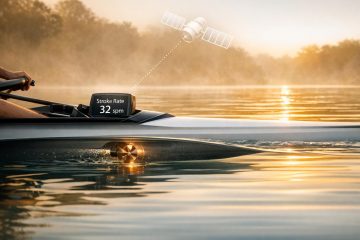
AI tools for indoor rowing typically analyze joint angles, such as those at the shoulders, hips, and knees. In contrast, on-water rowing focuses on boat dynamics like pitch, roll, and velocity. For instance, when rowing on water, it takes about 0.16 to 0.20 seconds (4 to 5 frames) for the blade to fully submerge after your seat reaches the front stops. This timing element doesn’t apply to indoor rowing on an ergometer. Additionally, external factors like wind, waves, and current can introduce noise into on-water data, a problem that indoor systems don’t face.
To address these differences, it’s helpful to use AI tools that average out a "typical stroke" instead of analyzing every single stroke. Pair video feedback with in-boat telemetry, such as data from Empower Oarlocks, to confirm that AI-recommended body angles lead to effective blade depth and boat acceleration. Comparing data only at the same stroke rates can also help account for variations in acceleration profiles.
These steps are crucial for ensuring that AI-generated metrics are accurate and applicable across different rowing environments.
Validating AI-Generated Metrics
AI can provide quick insights, but it’s important not to rely on it entirely. Always cross-check AI outputs with manual measurements or video replays to ensure accuracy. For example, use apps like Coach’s Eye to perform frame-by-frame analysis. This allows you to manually count the frames between key movements, such as from seat arrival to blade entry. Each frame represents 0.04 seconds, and optimal rowing shows blade coverage within 4 to 5 frames (0.16 to 0.20 seconds) after the seat reaches the front stops.
Make sure the AI correctly identifies critical components like the stretcher, seat, handle, and spoon at the catch. Reliable systems should also automatically filter out outlier strokes that deviate by more than ±1 stroke per minute from your target rate. Combining AI insights with manual verification ensures a more accurate and reliable analysis.
Conclusion
Key Benefits of AI in Rowing
AI has turned rowing into a precise, data-driven activity, moving away from guesswork. Tools like Ergatta’s Coach AI analyze your joint movements – including shoulders, elbows, hips, and knees – to identify the seven most common rowing mistakes, such as premature knee bending or leaning too far forward. You even get a "Great Form" score, rated from 0 to 100, to track your progress over time. Advanced platforms like CereBel go a step further, offering metrics that were once only available in specialized labs.
What sets AI apart is its ability to create a continuous feedback loop. By analyzing just one minute of video from your smartphone, you’ll receive a detailed report highlighting the percentage of strokes with specific errors, along with links to drills and instructional videos to help you improve. This ensures you maintain proper posture, reducing the risk of injuries while maximizing the benefits of your full-body workout.
AI also adjusts to your daily condition. Platforms like Athletica use heart rate variability (HRV) and sleep data to automatically fine-tune your training intensity – helping you avoid burnout while improving performance. Unlike rigid training plans, this flexible approach adapts to changes in stress, fatigue, or missed workouts. The result? Rowing with AI-optimized form can burn calories twice as fast as spinning, all while being gentler on your joints compared to running.
Next Steps for Rowers
Ready to get started? Begin by recording a one-minute video of yourself rowing, ensuring your entire body is visible in the frame. Using a rhythm-based workout during the recording can help you maintain consistent form.
If you’re searching for AI-powered tools to refine your technique, check out RowingList.com (https://rowinglist.com). This directory organizes rowing apps, coaching services, and training programs by type and discipline. Whether you’re rowing indoors on an ergometer or out on the water, you’ll find resources tailored to your needs. You can also sync data from devices like Concept2, Garmin, or Apple Watch, allowing AI tools to build your Critical Power Curve and optimize your training zones. With over 70% of new Ergatta members starting without prior rowing experience, these tools make rowing accessible and effective for everyone.
FAQs
How does AI help improve rowing technique through video analysis?
AI is transforming how rowing techniques are analyzed by breaking down video footage to identify areas that need improvement. Using advanced algorithms, it can spot even the smallest flaws in stroke form, posture, and timing – details that might escape even the most experienced coach.
When paired with performance data like stroke rate, power output, and boat speed, AI delivers a full picture of a rower’s technique. This combination enables athletes and coaches to make precise adjustments, fine-tune strokes, minimize inefficiencies, and ultimately improve performance on the water.
What do I need to record my rowing sessions for AI analysis?
To get started with recording your rowing sessions for AI analysis, all you need is a device that can capture video – like a smartphone or a camera. These devices make it easy to record short clips, usually around one minute, which is enough for most AI tools to evaluate your performance.
Many advanced AI systems rely on computer vision to analyze the video, breaking down details such as your posture and movement patterns. A simple video recording device is typically sufficient to produce footage that works well for biomechanical and technique evaluations.
How can AI help rowers avoid injuries?
AI is stepping into the world of rowing to help athletes stay injury-free by analyzing their technique in real-time. It monitors rowers’ movements closely, spotting improper actions that might lead to strain or overuse. By giving detailed feedback on things like posture, stroke consistency, and body alignment, these tools help athletes make necessary tweaks before problems develop.
Using advanced algorithms, these systems assess important metrics such as muscle activity, force application, and motion patterns. This data-driven method isn’t just about avoiding injuries – it also helps rowers improve their performance by encouraging safer and more efficient techniques. With tailored insights, athletes can maintain their health while reaching peak performance.